Wednesday, April 13, 2016

Renewable Energy Resources in the Philippines


1. Geothermal Energy – is thermal or heat energy from deep within the earth.
    Geothermal reservoir – is a suitable spot for the extraction of geothermal energy.
               Elements of a Geothermal Reservoir
·         a heat source; this is the magma located deep beneath the earth’s crust;
·         a reservoir made of permeable rock for holding water;
·         a caprock which serves as a seal and prevents water and steam from escaping.
·         and water which serves as the medium for transporting the heat to the surface. The water is replenished by rainwater which seeps through the cracks and pores in the rock layers.

                      How is Geothermal Energy Utilized?

The current and most widespread use of geothermal is in the production of electricity. This process requires exploration for suitable geothermal reservoirs. The reservoir must be close enough to the surface so that drilling will not be very expensive.

The production well that is drilled will serve as the source of steam or hot water. The steam is then used to drive very large turbines which convert the mechanical energy in the steam into electrical energy.

The used steam is sent to the cooling towers where it is condensed back into water and reinjected into the ground through an injection well. This is done to replace the water that was taken out of the reservoir. In this way, the geothermal plant is able to sustain its energy source.

                      Advantages of Geothermal Energy
1. More reliable compared to other renewable energy sources.
2. The supply of steam is fairly constant and power generation is not dependent on the                                                                                  fluctuations in the supply of oil.
3. Decreases reliance om imported oil.
4. Less polluting to the environment.
5. Help create new jobs and contribute to local funds and the development of countryside.

                       Disadvantages of Geothermal Energy
1. A geothermal plant spews out sulfur and nitrogen oxides and carbon dioxide that will fill two pickup trucks in a month.
2. Geothermal plants can cause surface disturbance during the construction phase, contamination of lakes and rivers, and noise pollution during well discharge.

2. Hydroelectric Power

                       How is Hydroelectric Power Utilized?

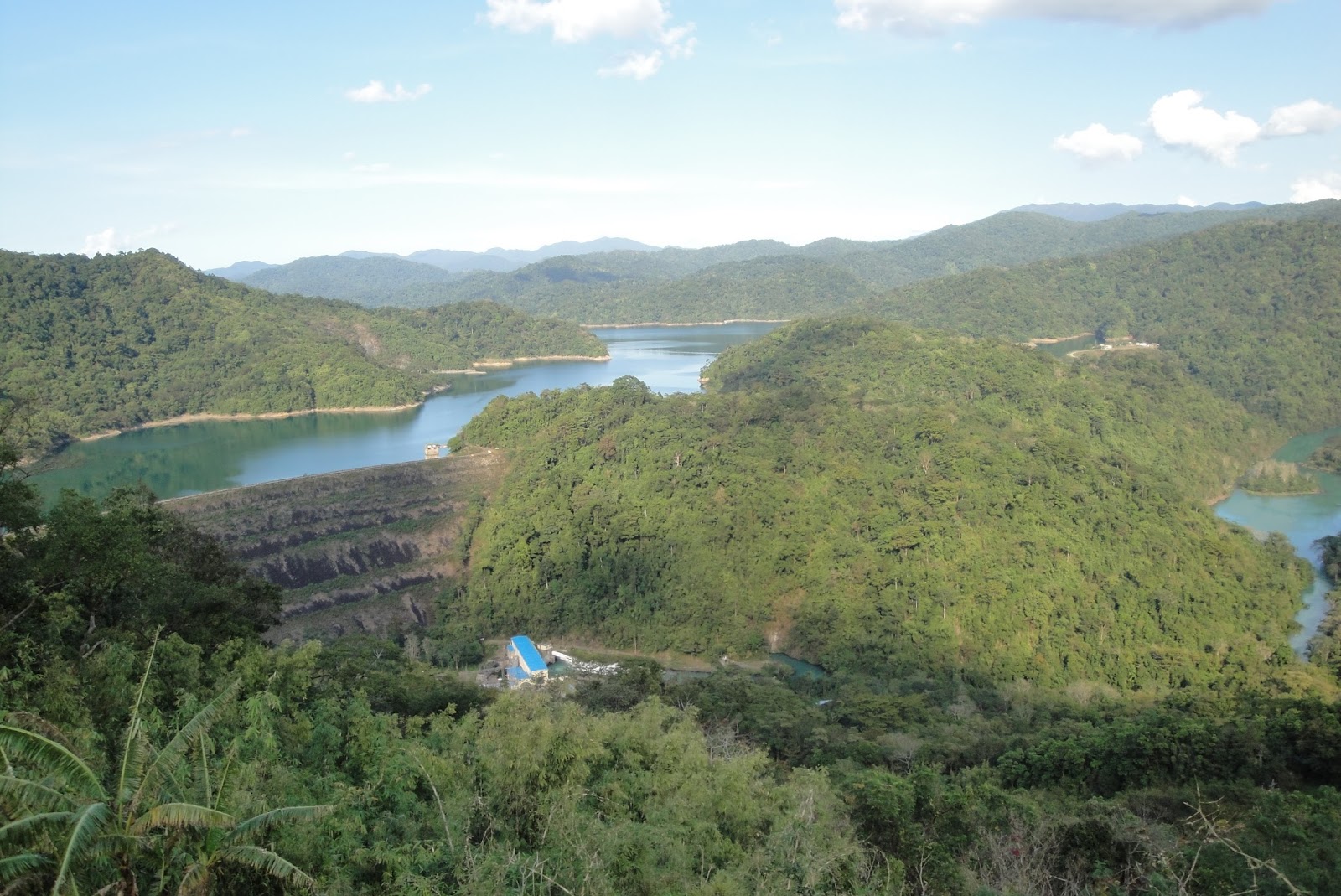
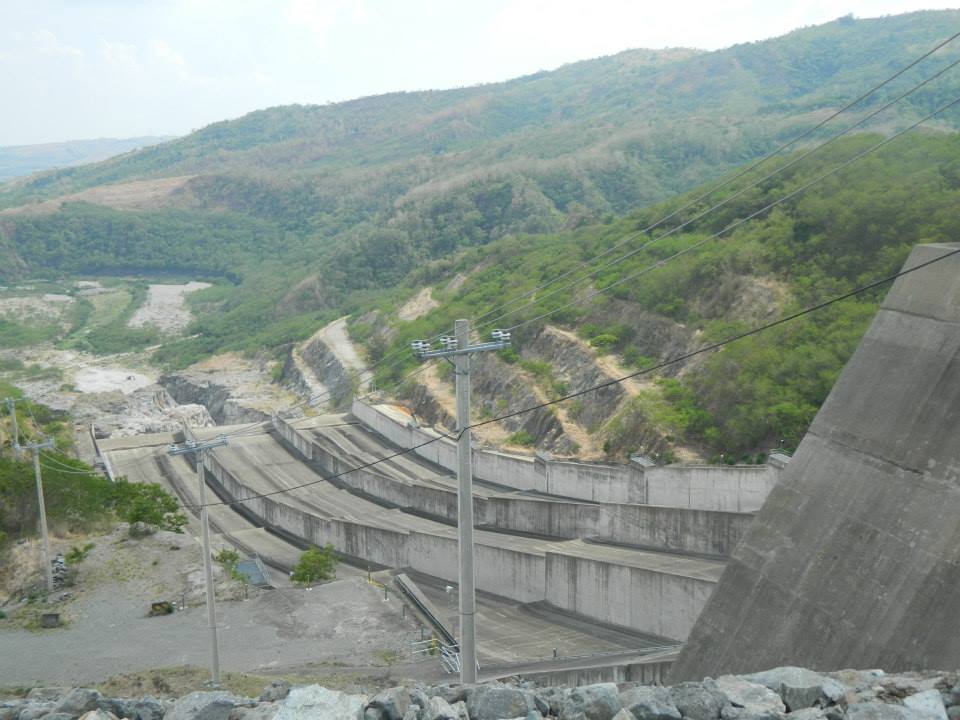
Hydroelectric power requires a high dam or waterfall. In most cases, a dam is used. Water is collected behind the dam and is allowed to flow out through an opening at the bottom. The flowing water spins a turbine generator which then generates electricity. 
The spent water coming out of the turbine can still be used for irrigation or as a water supply for homes.

For maximum output, the kinetic energy of the water must be greatest so that most of this energy is transferred to the turbine. With a waterfall, where would the kinetic energy of the water be greatest? The water flow at the bottom has the greatest speed and kinetic energy. This is also true with a dam. A turbine generator is therefore placed at the bottom of a dam or waterfall so that the turbine can spin faster and generate more electricity.

                      Advantages of Hydroelectric Power
1. Has no emissions of carbon dioxide, sulfur or any other pollutant.
2. Start up much faster, making them ideal for supplying energy during sudden increases in demand
3. Is simpler and requires fewer people to operate and maintain.

                      Disadvantages of Hydroelectric Power
1. Dams can cause flooding of watersheds, destroying flora and fauna.
2. Relocation of indigenous tribes living in the mountains.
3. Dam failure due to earthquake or excessive rainfall can result in flooding and the deaths of thousands of people.
4. Dams can be filled with silt over time, shortening their lifespan.

Examples of Hydroelectric Plant in the Philippines

                 Angat Dam in Norzagaray, Bulacan


San Roque Dam, San Manuel, Pangasinan


3. Wind Energy

                  How is Wind Energy Utilized?

Wind energy for the generation of electricity. As with the other means of harnessing energy, this also relies on a turbine – a wind turbine.

There are two main designs for wind turbines currently in use – the horizontal axis and the vertical axis wind turbines. Of the two, the horizontal axis wind turbine is more widely used and studied.

A horizontal axis has the following components:
·         Blades – harness the wind’s kinetic energy, transforming it into rotational kinetic energy.
·         Gear box – contains the mechanical parts for increasing the rotational speed for turning the generator.
·         Generator – transforms mechanical energy into electrical energy.
·         Directional mechanism – provides a means for swinging the blades into the wind for maximum efficiency.
·         Protection mechanism – the brake is activated when the conditions are not ideal. If the wind is too weak, operation is not efficient. If the wind is too strong, the brakes prevent the rotor from spinning and causing possible damage.
·         Tower – raises the turbine well above the ground to avoid turbulent winds and to expose the blade to higher wind speeds found at greater elevations.

An alternative design is the vertical axis wind turbine, so called because it rotates about a vertical axis much like an eggbeater. Because the wind is perpendicular to the axis of rotation, this turbine can utilize wind blowing from any direction and does not require a directional mechanism. The generator and the gearbox can also be conveniently located at ground level so there is no need for a tower. To reduce stress, the blades are made from lightweight but strong composite materials.

The amount of energy that can be extracted from the wind is determined by three physical principles.
·         The power generated by a turbine is highly dependent on wind speed, Doubling the wind speed results in 8 times more power; triple the wind speed means 27 times more power. To be economical, wind speeds in a given place must be at least 4-5 m/s.
·         The greater the length of the blades, the greater the generated power. Doubling the blade length increases the power four times; triple the blade lengths results in 9 times more power.
·         The maximum efficiency of a wind turbine is 59%

Horizontal axis wind turbines tend to be more efficient than the vertical axis designs. Some designs can extract up to 45% of available energy from the wind. But since the blade and the generator have to be at the top of the tower, turbines with large capacities tend to be expensive.

                      Advantages of Wind Energy
1. Wind power is one of the most environment friendly resources available.
2. It is widely available I our country,
3. Wind turbine technology is mature and there are advanced systems that are both cheaper and more efficient than previous designs
4. Wind turbines can be installed in uninhabited areas such as mountains and hills or integrated with existing farm lands.

                      Disadvantages of Wind Energy
1. Wind turbine designs for our country have to be very strong to be able to withstand strong winds. This makes these turbines more expensive.
2. The amount of available wind energy changes from time to time. A way of storing energy must be available to provide power during periods of calm or light winds.

3. Can cause some visual and noise pollution.

Example of Wind Energy in the Philippines is the Bangui Windmill in Pagudpud, Ilocos Norte


4. Solar Energy

                      How is Solar Energy Utilized?

There are several ways of using solar energy but the most widely used and most appropriate for our country is the conversion of sunlight directly into electricity. This is done through the use of solar cells (also known as photovoltaic cells, or PV cells).

A PV cell is made of a semiconductor material, usually silicon. A semiconductor material is a substance which is neither a conductor nor an insulator. Addition of very small quantities of another substance, such as boron, to silicon changes its electrical properties. This results in n-type (negatively charged) and p-type (positively charged) semiconductors. A PV cell is formed by sandwiching an n-type and a p-type material together. When the PV cell is exposed to light, electrons are liberated from the n-type material. By attaching a load, such as light bulb, we can draw electricity from the PV cell. Several PV cells connected together make up a PV panel.


Three types of Solar Cells

·         Single-crystal solar cells are made from a large crystal of very pure silicon that has been grown under high temperatures (about 1400oC). Single-crystal cells are efficient but the manufacturing process is very expensive.
·         Polycrystalline solar cells are simpler and cheaper to make. Molten silicon is placed in moulds then cut into wafers to produce polycrystalline cells. But although these cells are cheaper, they are not as efficient as single-crystal PV cells.
·         Thin-film solar cells are made by depositing very thin films (thinner than a human hair) of silicon on a substrate such as glass. Because they are so thin, these cells require less silicon and can be deposited on flexible materials such as plastic.

                        Advantages of Solar Energy

·         PV cells require very little maintenance and can be located in remote sites that do not have direct access to the main electricity grid
·         They are quiet and nonpolluting.
·         Because they have no moving parts, PV cells are expected to last a long time.
        
                       Disadvantages of Solar Energy

·         Initial cost system is very high.
·         There are very few technicians for PV system.

·         It requires a large hectare of land.

Friday, March 25, 2016

Steps in Scientific Method


1. Observation – it is a way of gathering data through the use of five senses: sight, smell, touch, hear and taste. Qualitative observations describe what you see while quantitative observations measure what you see. The problem or question is based on observation.

2. Hypothesis – it is the tentative explanation for the observation. Possible solution to the question or problem is formed with the assumption that the answer could be incorrect.

3. Prediction – it is a specific statement deduced from the general statement in the hypothesis. Using hypothesis as a guide, a prediction can be made.

4. Experimentation – it is a way of testing the accuracy of the prediction. Controlled experiment involves testing a variable (experimental) against a control.

5. Data analysis – data from the experiment are collected, recorded, and analyzed.


6. Conclusion – it is the summary of the experiment’s results, and how the results match with the hypothesis. A valid conclusion must be based on: the facts observed in the experiments. The two options for the conclusions are reject the hypothesis, or accept the hypothesis.

Parts of Eukaryotic Cell

1. Nucleus – this is the most noticeable feature that differentiates eukaryotes from prokaryotes. It is a membrane-bound central cell organelle which contains the genetic material – DNA

2. Plasma membrane – it is the structure that serves as the boundary between the cytoplasm of the cell and the external environment. It is phospholipid bilayer, a double membrane composed of a unique type of lipid that spontaneously organizes into two layers. The plasma membrane regulates the materials that enter or leave the cell and provides mechanisms for cell-to-cell communication.

3. Cytoplasm – it is the jellylike materials that consist of the organelles outside the nucleus and fluid portion called cytosol. The flowing movement of cytosol, known as cytoplasmic streaming, allows organelles to interact with one another.

4. Cytoskeleton – this is a network of microtubules, intermediate filaments and microfilaments which is the cellular “scaffolding” or “skeleton” within the cell. This scaffolding has various functions: maintains the cell’s shape, protects the cell, enables some cell motion (using flagella and cilia), plays important role in intra-cellular transport (the movement of vesicles and organelles) and it is involved in cellular division.

5. Cilia and Flagella – these are external appendages of the plasma membrane that aid in locomotion of the cell, adhesion and movement of materials on the outside of the cell. Cilia are tiny hair like structures while flagella are whip-like tail. Cilia are shorten than flagella and there are more cilia per cell compared to flagella.

6. Ribosomes – these are the tiny cellular structures involved in making proteins under the instruction of DNA. Ribosomes are found attached to the rough endoplasmic reticulum or floating free in the cytoplasm.

7. Mitochondria – they are small spherical to rod-shaped cytoplasmic organelles, enclosed by two membranes. They are considered the powerhouse of the cell because it is the site of the final and most energy-productive steps of metabolism which generates cellular energy (ATP).

8. Endoplasmic Reticulum (ER) – a network of tubules and flattened sacs which is a continuation of the outer nuclear membrane. There are two types of endoplasmic reticulum, rough ER and smooth ER. The granules that are attached to rough ER are the ribosomes that form granules on the surface to give it a “rough” appearance. It is involved in the synthesis of proteins. Smooth ER does not contain ribosome and it is involved with the synthesis of fatty acids and membrane components such as lipids.

9. Golgi bodies (Golgi apparatus, Golgi complex) – stacked, flattened membranes which is involved in modifying, sorting, and packaging the macromolecules for use within the cell or for secretion.

10. Centrioles – cylindrically-shaped cell structure found in animal cells which play a role in cell division.

11. Chloroplasts – these are round, oval, or disk-shaped structure within a green plant cell in which photosynthesis occurs. They absorb light energy and convert them to chemical energy in the process of photosynthesis.

12. Lysosomes – these are membrane-bound vesicles found in animal cell that contain hydrolytic enzymes.


13. Peroxisomes – small, membrane-enclosed organelles that contain enzymes which are involved in the breakdown of fatty acid molecules.

Parts of Prokaryotic Cells


1. Capsule – an additional outer covering that protects the cell when it is engulfed by other organisms. It is also important in retaining moisture and helps the cell adhere to surfaces and nutrients.

2. Cell Wall – outer covering that protects the cell and gives it shape.

3. Cytoplasm – a gel-like substance composed mainly of water. It also contains enzymes, salts, cell components, and various organic molecules.

4. Cell Membrane or Plasma Membrane – surrounds the cell’s cytoplasm and regulates the flow of substances in and out of the cell.

5. Pili – thin, non-flagellar protein filament found on the surface of the cell which is important in the exchange of genetic material between cells. Fimbriae are thin, hair-like, projections which are made of protein sub-units. It promotes attachment or adhesion to surfaces.

6. Flagella – long, whip-like protrusion that aids in cellular locomotion.

7. Ribosomes – sphere-shaped structure found in the cytoplasm which is responsible   for protein synthesis. They are composed of protein and ribonucleic acid (RNA).

8. Plasmids – gene carrying, circular DNA structures that are not involved in reproduction.

9. Nucleiod region – area of the cytoplasm that contains the single bacterial DNA molecule.

Thursday, March 3, 2016

Worksheet Sound with Rubric Scoring


Title of the Activity: Big time gig!

Objectives

In this activity, you should be able to:
1. create musical instruments using indigenous products and
2. use these instruments to compose tunes and present in a Gig. Students may also utilize other indigenous musical instruments.

Materials Needed

·         Indigenous materials such as sticks, bottles or glassware available in your locality to be used as musical instrument
·         Localized or improvised stringed instruments
·         Localized or improvised drum set

Procedure
1. Form a group of four (4). One can play a stringed instrument, while the other can play the drum and the 3rd member can use the other instrument that your group will design or create. The last member will be your group’s solo performer.
2. Look for local materials which you can use to create different musical instruments.
3. Try to come up with your own composition using the instruments you have created.
4. In the class GIG you are to play and sing at least 2 songs (any song of your choice and your original composition).

5. Check the Rubric included to become familiar with the criteria for which you will be rated.

Big Time Gig!

Rubric Scoring

Task/Criteria
4
3
2
1
Score
Improvised/
Localized
Musical
instruments
*Makes use of
local or indige-
nous materials.

*The
improvised instruments
produce good
quality sound
comparable
to standard
musical
instruments.
*Makes use of
local materials
only.

*The
improvised
instruments
produce
good quality
sound.
*Makes use of
local materials
only.

*The improvised
instruments
produce fair
quality sound.
*Makes use of
local materials only.

*The sound
produced by
the improvised
instruments is
not clear and
distinct.

Composition
The group’s
original
composition
has good
melody.

The lyrics provided are
thematic and
meaningful.
The group’s
original
composition
has fair
melody and
the lyrics
provided are
thematic and
meaningful.
The group’s
original
composition
has fair
melody and
the lyrics
provided are
NOT thematic
but
meaningful.
The group’s
original
composition
has fair
melody and
the lyrics
provided are
NEITHER
thematic nor
meaningful.

Performance
*The group
was able to
successfully
use the
improvised
musical
instruments
in their GIG.

*The group was able to
provide good
quality rendition or
performance.

*The group
was able to
successfully
use the
improvised
musical
instruments
in their GIG.

*The group was able to
provide fair
rendition.
*The group
was able to
use the
improvised
musical
instruments
but some
were out of
tune.
*The group
was able to
provide fair
rendition.
*The group
was able to
use the
improvised
musical
instruments
but MOST
were out of
tune.
* The group
was able to
provide fair
rendition.

Cooperation
and Team
work
Each one of them
completed their
task so as to
come up with
the expected
output – GIG.
3 out of 4
members
completed their task so
as to come up
with the
expected
output - GIG
2 out of 4
completed their task so
as to come up
with the expected
output - GIG
Only 1 out of
the 4
members did
his/her job.


TOTAL:


Wednesday, March 2, 2016

Philippine Environmental Problems

                       Main Environmental Issues

1. Pollution
                  Environmental Problems
  •  dirty air
  • unsafe drinking water; dirty bodies of water;    eutrophication
  • uncollected garbage; unsanitary disposal of solid waste;     dangerous pesticide residues in the soil or water supply


2. Degradation of Natural Resources
                 Environmental Problems
  • destruction of forests; flooding
  • depletion of wildlife
  • soil erosion
  • depletion of mineral resources
  • insufficient supply of water
  • energy shortage


3. Conflicting and Changing Land Use
                   Environmental Problems
  • rapid disappearance of mangrove swamps due to conversion into fish ponds, salt beds, agricultural land, etc.; conversion of forests into agricultural land, agricultural land into residential land or commercial land; etc.

Wednesday, February 3, 2016

Bodies of Water (Philippines)

1. Ocean - is the largest body of water.
             Oceans on Earth
1) Pacific Ocean - largest ocean in the world.
2) Atlantic Ocean
3) Indian Ocean
4) Arctic Ocean


2. Sea - smaller than ocean
Example: Red Sea, Mediterranean Sea, Adriatic Sea
The Philippines is also surrounded by seas - the West Philippine Sea in the west, the Philippine Sea in the east, the Sulu Sea in the southwest, and the Celebes Sea in the south.

3. River - is a long and narrow body of water. Its water originates from mountains and it flows into an ocean, sea, or another river.
Example: Marikina River, Pasig River, Agusan River
Rio Grande or Cagayan River - the longest river in the Philippines which is about 350 km in length.
Viray River
Natividad, Pangasinan, Philippines

4. Falls - a body of water that descends from a high cliff.
Example: Pagsanjan Falls - Laguna
                 Tinago Falls - Iligan City
                 Hinulugang taktak - Antipolo City
                 Katibawasan Falls - Camiguin Island
Maria Cristina Falls - third highest waterfall in the Philippines, generates about 70% of Mindanao's electricity.
Maranum Falls
Natividad, Pangasinan, Philippines
5. Lakes - are inland bodies of fresh water.
Example: Taal Lake - Batangas
                 Lake Sebu - South Cotabato
                 Lake Lanao - Lanao del Sur
                 Lake Buhi - Camarines Sur
                 Bulusan Lake - Sorsogon
Laguna de Bay - largest lake in the Philippines.